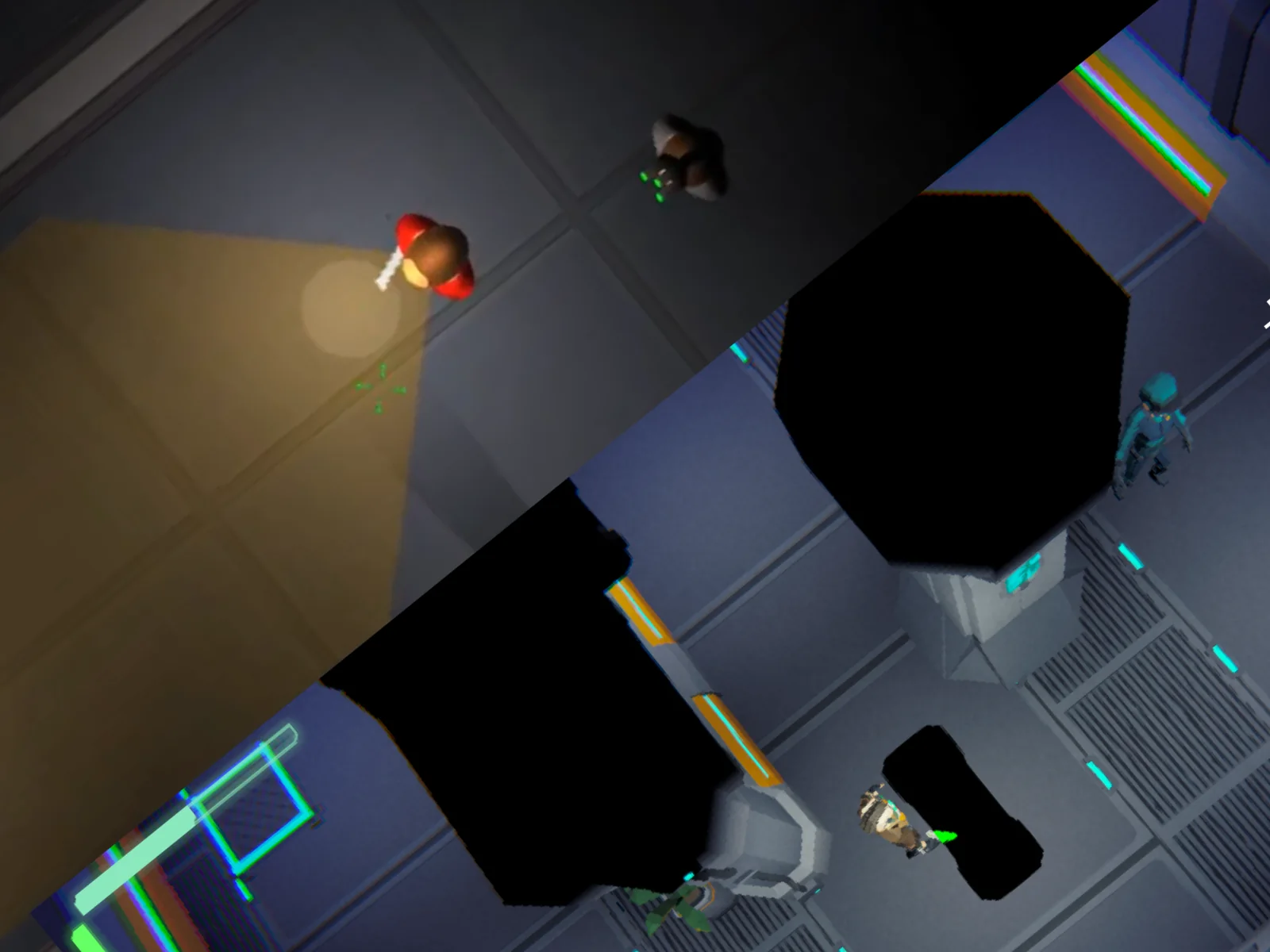
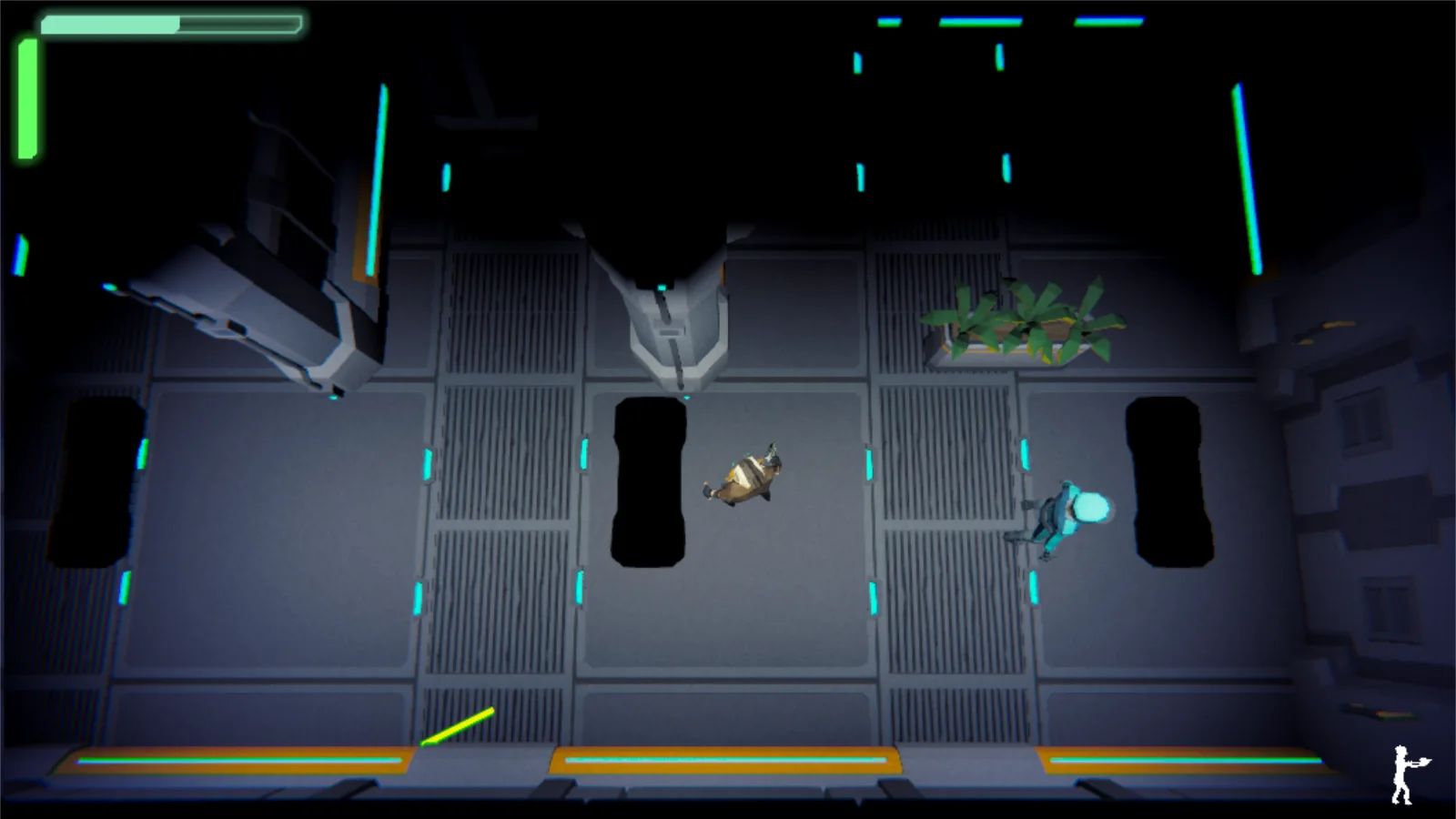
Shadow Strike began as a small 2D stealth game designed and developed for a programming assignment during my game development studies at the UOC.
The original version already contained the core fantasy of the project: infiltrating hostile spaces, avoiding enemies, interacting with doors, and using shadows as the main way to stay hidden. Enemy detection was not purely binary. Whether the player was detected depended on factors such as distance, line of sight and how much light was hitting the character.
The game also included night vision, which allowed the player to see in dark areas but became a disadvantage in brightly lit spaces. This created a simple but interesting relationship between light, visibility and player vulnerability.
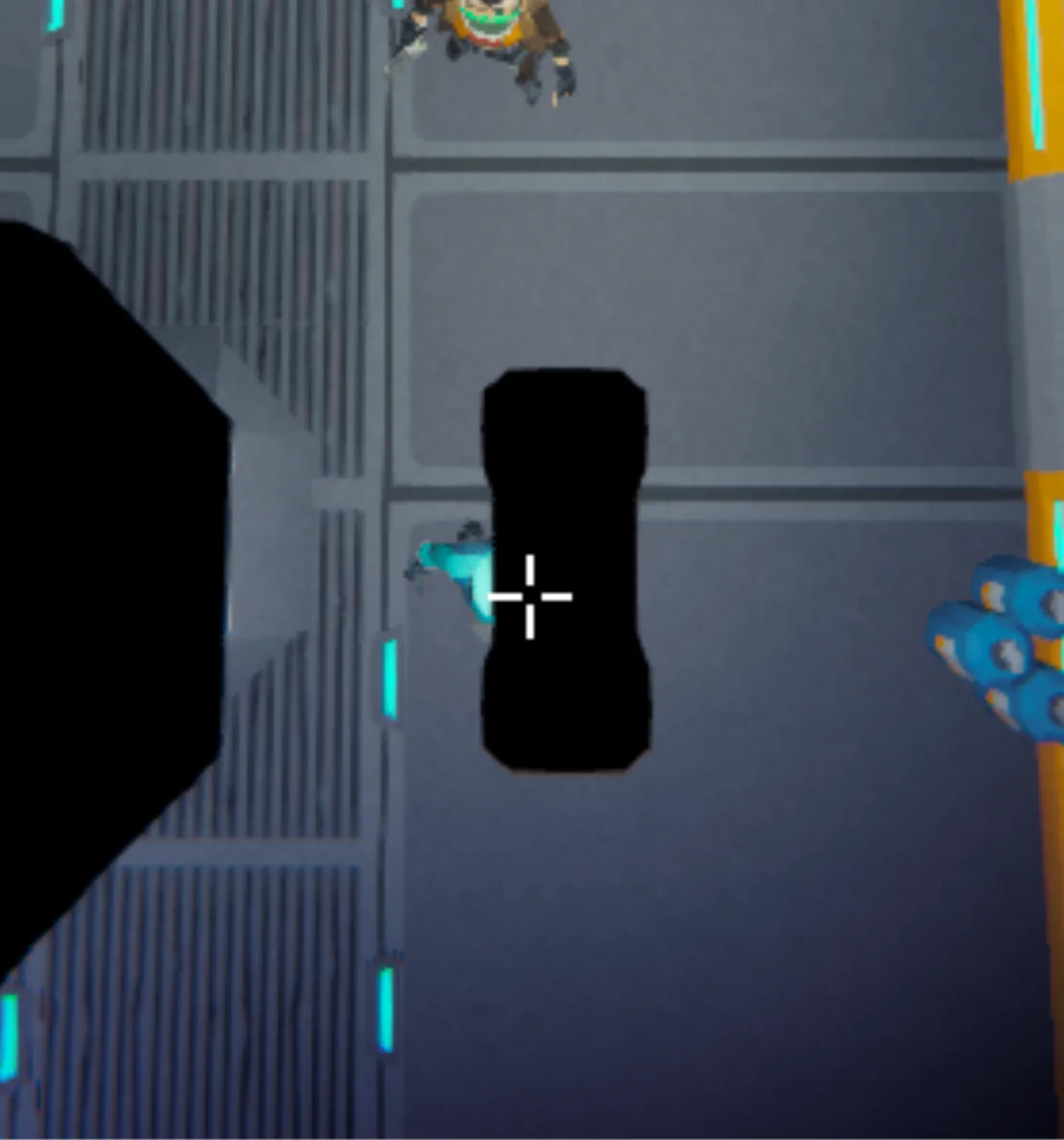

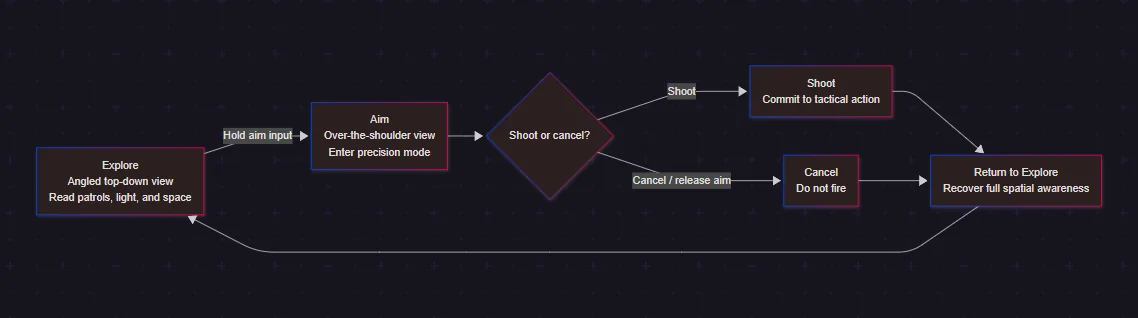
When I started reimagining the project in 3D, I wanted to preserve that original identity. The new version still uses an angled top-down perspective for exploration, keeping the tactical readability of the 2D prototype, but it also uses the third dimension to create new navigation and interaction possibilities.
For example, vents can exist below the floor and become alternative infiltration routes. Lights and lamps can be placed on ceilings, not just walls or props at character height. This made the world feel more believable and opened new design opportunities.
But it also created a new problem.